Endometriosis is not just a “Bad Period”. Let’s get one thing out of the way right now, periods are not meant to be painful. It is normal to have some discomfort but pain is an indicator that something else might be going on and you should talk to your doctor, especially if that pain is getting in the way of you living your life normally. With that being said, let’s highlight that first sentence; Endometriosis is not “Just a Bad Period”.
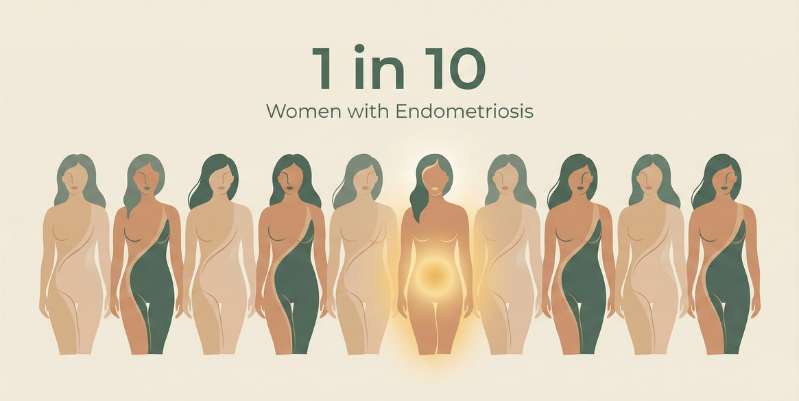
Endometriosis is a condition that affects approximately 1 in 10 women worldwide. It takes on average 7-10 years to get diagnosed. During those 7-10 years, patients deal with debilitating pain, fatigue, gut dysfunction, brain fog, and more, all while the disease is left unchecked. Endometriosis is progressive, meaning it grows and changes overtime and leads to more systemic symptoms.
So why does it take so long for a diagnosis?
There are a few reasons this disease is not recognized for nearly a decade. First, it is difficult to conclusively diagnose, with the gold standard diagnostic strategy being explorative laparoscopic surgery. Often, doctors will put off a surgery or discourage it if the patient is younger because no one wants to do a surgery for no reason. There are imaging options, ultrasounds and MRIs are often ordered, but lesions can be very small and are often missed. Small lesions can still cause horrible, debilitating symptoms. Education around the disease in medical schools is lacking. Most future doctors are learning that endometriosis is a gynecological disease and overlook the more systemic symptoms. This leads to misdiagnoses like anxiety, IBS, and primary dysmenorrhea (painful periods without a cause).
So what actually is Endometriosis?
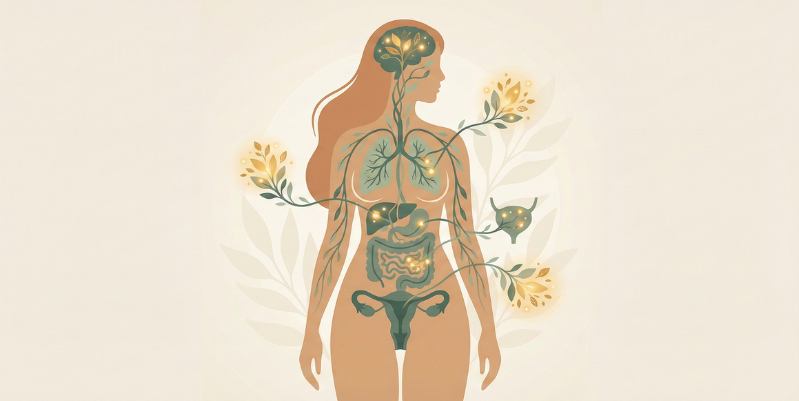
Endometriosis is the implantation of endometrial-like tissue outside of the uterus. These implants are commonly found on or around the ovaries, on the uterine ligaments, bladder, uretors, or bowel, and can even be found higher up on the diaphragm, liver, and spleen. People with endometriosis can also develop what are called endometriomas, which are blood filled cysts generally on the ovaries. Endometriosis has been found in nearly every organ of the body including the lungs, heart, eyes, and brain but these are rare cases. The lesions can create their own nerves, blood supply and hormones. The disease can spread throughout the body similar to a cancer, but without the true biomolecular changes that are unique to cancer’s uncontrolled growth. The lesions then respond to hormone cycles and contribute to low grade inflammation which can wreak havoc on the body’s system as a whole. When the lesions bleed in response to the normal hormone cycles, the trapped blood and resulting inflammation leads to the formation of scar tissue and adhesions that can eventually “glue” the pelvic organs together.
There is a wide range of disease presentations, and we have stages to describe the differing severities, although symptoms do not always correlate with the disease stage. The stages are as follows:
Stage 1: Small, superficial lesions on the surface of organs or in the pelvis causing little to no scarring
Stage 2: More lesions that are larger and starting to lead to scar tissue formation
Stage 3: Increasing number and size of lesions, presence of deep infiltrating lesions meaning advancing 5mm into the organ they are attached to, presence of at least one small endometrioma (<3cm in diameter)
Stage 4: Multiple deep implants (>5mm) and the presence of at least one large endometrioma (>3cm)
What Causes Endometriosis?
The exact cause is not known, but there are a few theories, and it is most likely a combination of these factors.
Retrograde menstruation → This is the backflow of menstrual blood through the fallopian tubes from the uterus and into the pelvis. This is one of the older theories and explains how the tissue can end up in the pelvic cavity. Unfortunately, it is not the full story because retrograde menstruation happens in most women. This means that there has to be another explanation for how the tissue is transformed into endometriosis.
Immune System Dysfunction → Research is showing that certain immune cells behave differently in people with endometriosis potentially allowing the tissue to survive better. Some of these impacted immune cells include Macrophages, NK cells, Mast cells, T cells and more. The research on this is still evolving but it seems that the reduced functioning of some of these cells allows for the survival of endometriosis while the over secretion of pro-inflammatory mediators by others favors the growth of the lesions.
Hormonal Imbalance → Excessive estrogen in the pelvis may promote the growth of endometriosis lesions.
Genetics → If a first degree relative has been diagnosed with endometriosis you are more likely to have it as well.
Environmental Factors → exposure to hormone disrupting chemicals may play a role in the development of endometriosis
Common Symptoms
Endometriosis can present differently for everyone but some of the more common symptoms include:
Severe pain during periods
Pain with ovulation
Fatigue
Brain Fog
Pain with Intercourse
Pain with Bowel Movements
Constipation or Diarrhea - IBS like symptoms
Pain with Urination
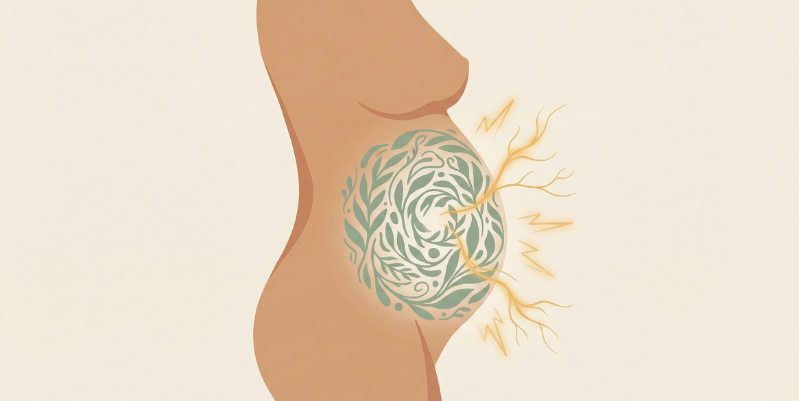
Bloating - Endo Belly
Infertility or Difficulty Conceiving
Final Thoughts
Endometriosis can be a debilitating and demoralizing disease. Prompt diagnosis is important for quick intervention to prevent progression to more severe stages. There is no cure for endometriosis and a lot of the treatments available are not very effective. There can be recurrence after surgery and while people tend to have improvement after menopause, menopause is not a cure either. If you are experiencing painful periods and other systemic symptoms, it is important to speak with your doctor and advocate for yourself. Naturopathic medicine can offer support in managing symptoms and preventing/slowing progression or recurrence. Endometriosis is not an easy disease to live with and you deserve all the support and evidence based care you can get!